Evacuating During a Coup: Essential Travel Risk Steps
Practical frameworks for individuals and organizations operating with limited resources
Evacuating a foreign country during a coup is rarely straightforward. Airports may close, roads become unpredictable, communications deteriorate, and rumors spread quickly. For travelers, field teams, and the organizations that send them (commercial, nonprofit, humanitarian, or faith-based), the difference between a controlled departure and a chaotic scramble often depends on preparation completed weeks or months in advance.
This is not abstract theory. It is applied Protective Intelligence and Travel Risk Management under tight timelines. The objective is not perfection, but to create decision space when the environment is deteriorating rapidly.
Staying Informed and Reading the Environment
Effective evacuation starts well before the first roadblocks appear. Those who leave safely are typically the ones who treat political instability as a measurable risk, not a distant possibility. Establish a simple, repeatable information routine that does not require a dedicated analyst. Monitor a short list of local and regional sources daily, cross-check with official channels, and look for shifts in tone or volume rather than waiting for a dramatic headline. Government statements, opposition messaging, military movements, and changes in public behavior all contribute to the overall picture. When the same indicators appear across multiple independent sources, the likelihood of rapid deterioration increases.
This is practical Protective Intelligence: turning open information into early warning without costly tools. The alternative is realizing the situation only after airports have closed, which is almost always riskier and more expensive.
Most coups are preceded by visible political strain. Election disputes, sudden resignations, mass protests beyond historical norms, unusual military deployments, or disruptions in currency and supplies often appear days or weeks in advance. Ignoring these signs is a common mistake. A brief daily review (fifteen minutes each morning of trusted local outlets, embassy alerts, and regional analysis) builds pattern recognition. When the pattern shifts, your decision threshold should already be set. Waiting for perfect clarity is equivalent to deciding to stay.
Anticipating Indicators and Setting Tripwires
Coups rarely occur without warning for those who know what to monitor. Setting clear tripwires before travel turns uncertainty into actionable decision points. Define in advance the specific conditions that will trigger departure, such as sustained closure of major airports, verified reports of security forces refusing orders, widespread disruption of fuel or banking, or official travel advisories at the highest level. Document these triggers and share them with your team and home-base contacts. Once a tripwire is crossed, the focus shifts from “should we leave?” to “how do we execute our plan?” This practice prevents paralysis under stress and is one of the most effective Travel Risk Management tools for any traveler or small organization.
Tripwires are most effective when they are objective and limited in number. Too many cause confusion; too few leave gaps. Practical examples include commercial flight cancellations exceeding 50 percent on primary routes, confirmed movement of heavy weapons into the capital, or the departure of a significant number of diplomatic or NGO personnel. Review and update tripwires before each deployment. The discipline of pre-commitment distinguishes those who leave early from those who leave late.
Contacting Your Embassy or Consulate Early
As soon as political conditions deteriorate, your home-country embassy or consulate becomes a key source of information and coordination. Registration programs such as the U.S. Smart Traveler Enrollment Program (STEP) and similar systems are designed for these situations. Enrollment is free, quick, and ensures your details are available for emergency messaging and potential assisted departure. In addition to registering, establish a direct contact channel if your organization has an ongoing presence in the country. Embassies cannot guarantee individual evacuations and have limited capacity, but they remain the primary source for official guidance, flight options, and border updates. Relying on them only at the last minute is a common and costly mistake.
Embassies have their own constraints. In a full-scale crisis, they prioritize citizens, then permanent residents, and act only when conditions permit. Understanding this in advance sets realistic expectations: the embassy is a critical partner, not an on-demand rescue service. Maintain contact before you need assistance.
Preparedness Over Last-Minute Evacuation
The most effective evacuation is one that never becomes an emergency extraction. Once commercial options disappear and roads become contested, every remaining choice carries greater cost and risk. Organizations that grant early-departure authority and provide clear thresholds and decision rights to field personnel consistently outperform those requiring multi-level approval during a crisis. Personal readiness further strengthens this advantage. Knowing your documents, medications, cash position, and primary and alternate routes before the first warning sign creates options when others are still deciding. The window for orderly departure is often only hours once a coup begins. Those who have already decided to leave when that window opens are the ones who succeed.
This is not about panic. It is about recognizing that reaction time during political collapse is measured in hours, not days. Pre-authorized departure criteria and pre-packed essentials reduce obstacles when speed is critical.
Evaluating Personal and Group Circumstances
Every evacuation decision must consider the specific people involved. Health conditions, mobility limitations, language skills, family members, and emotional resilience all affect what is possible. A plan suitable for a fit solo traveler may not work for a team with someone who has limited mobility or chronic medical needs. Conduct this assessment before travel, not during a crisis. Document medications, dosages, and required equipment. Identify who will need assistance and who can provide it. For organizations, this assessment is a basic duty of care. Overlooking individual constraints during a crisis leads to incomplete plans and increased risk for everyone.
Group dynamics are important. A small field team that has discussed roles, rally points, and decision authority in advance will move faster and with less friction than a group improvising under pressure. Simple pre-mission discussions about these topics yield significant benefits.
Crafting and Testing an Exit Strategy
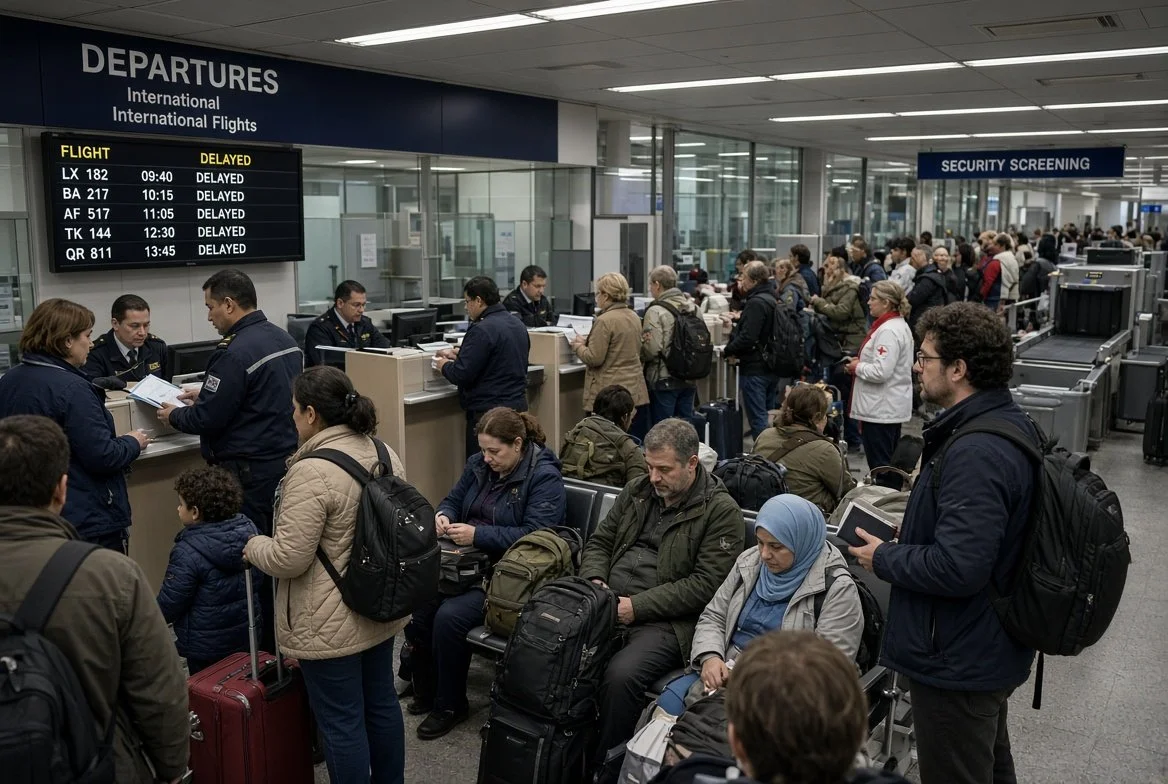
An effective exit strategy is specific, offers multiple options, and is at least mentally rehearsed. Identify primary and alternate airports or border crossings. Map overland routes that avoid the most contested areas. Confirm fuel, cash, and vehicle readiness if self-movement is required. Establish rally points and communication protocols for the team. Since conditions change quickly, the strategy should include triggers for switching between options. Use commercial flights while available. Charter options, if budget permits, provide a secondary layer. Overland movement to a neighboring country is often the last viable option once air routes close. Organizations that treat route planning as a standard practice, not a crisis response, achieve the best outcomes.
Test the plan against realistic constraints. Consider scenarios such as the primary airport closing at 0200, cellular networks degrading, or cash points failing. Preparing for these situations in advance distinguishes a controlled departure from an improvised scramble.
Assembling a Practical Emergency Kit
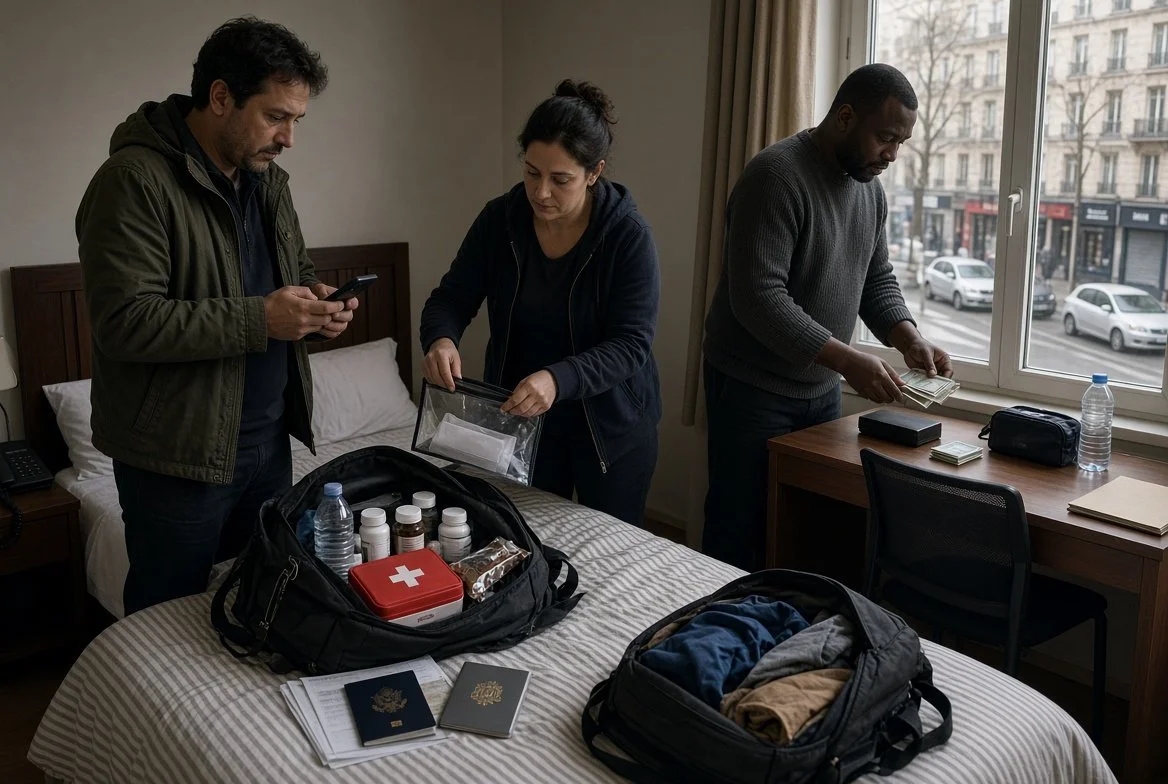
A go-bag is essential and represents your exit strategy in physical form. At minimum, it should include current passports and visas, local and hard currency in small denominations, essential medications in original packaging, a basic trauma kit, two changes of clothing, a headlamp, power banks, and a communication device that does not rely solely on the local cellular network. Keep copies of key documents both digitally (encrypted) and on paper. The bag should be light enough to carry quickly and ready for immediate use. In a coup, the ability to move at once with 48–72 hours of self-sufficiency is a significant advantage.
Review and update the kit before every trip. Medications expire, documents change, and power banks lose capacity. A neglected go-bag offers little advantage over having none.
Maintaining a Low Profile
Visibility increases risk during political upheaval. Avoid large gatherings, protest routes, and government buildings. Dress and move discreetly. Limit social media activity that reveals your location or movements. Stay indoors when possible, and when movement is necessary, do so with clear intent. Individuals and teams who remain inconspicuous during instability preserve more options and face fewer threats. Maintaining a low profile is active risk reduction, not passivity.
This discipline also applies to communications. Avoid discussing departure plans in public spaces or on unsecured channels. Information discipline protects both individuals and groups.
Trust but Verify Information
Official advisories from your government and local authorities provide the baseline. While not infallible, they are the most accountable sources. Supplement them with multiple independent channels such as reputable local journalists, established regional analysts, and direct contacts on the ground, while remaining cautious of unverified social media claims. In a coup, information is contested. Relying on a single source creates blind spots. Confirming critical information across at least two independent channels before acting reduces the risk of decisions based on rumor or misinformation.
The same principle applies to local guidance. Treat it as valuable input, but not as unquestioned fact. Cross-check information whenever possible.
Leveraging Local Knowledge with Care
Local contacts often have the most current information on road conditions, safe neighborhoods, and informal transportation options. When used carefully, this knowledge fills gaps that official channels cannot. However, crisis environments attract opportunists. Share only essential information. Rely on longstanding relationships rather than new acquaintances offering help. When uncertain, use official channels and pre-planned routes. Local insight is valuable, but misplaced trust can be costly.
For organizations with an ongoing presence, pre-identifying a few trusted local partners before any crisis is highly beneficial. These relationships are difficult to establish once a situation has deteriorated.
Expecting Delays and Building Resilience
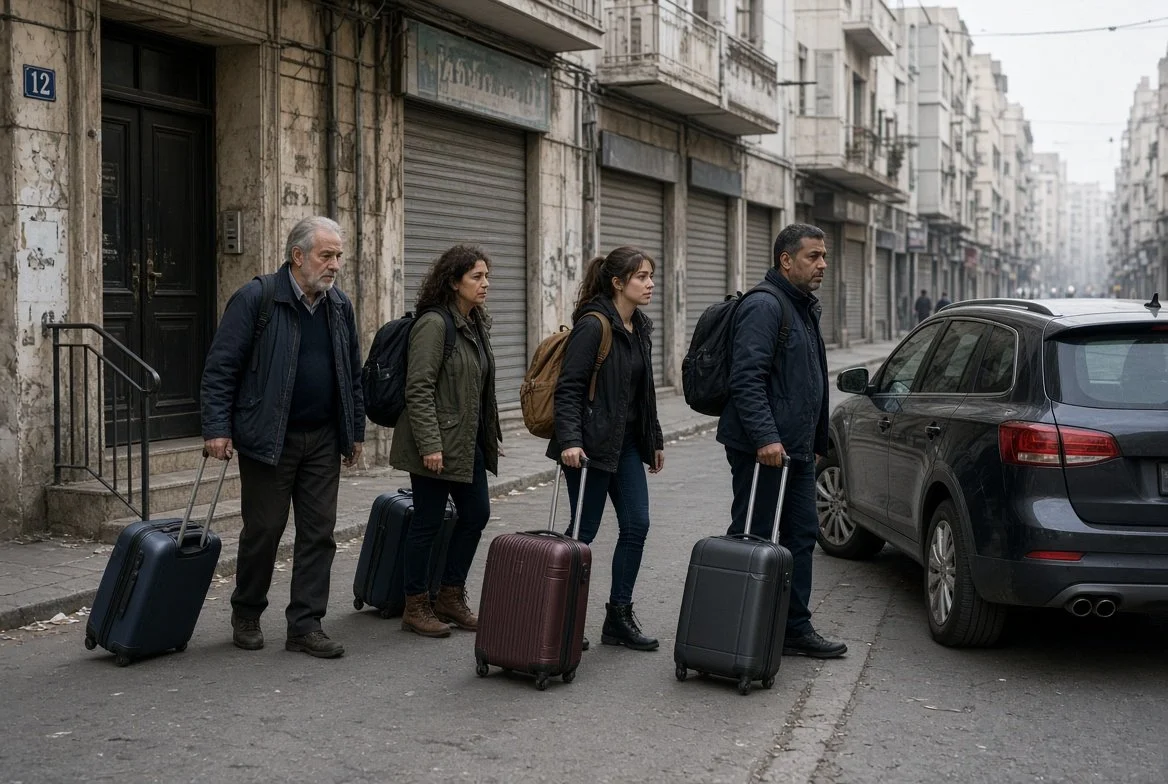
Transportation networks and communications often degrade during political collapse. Airports may close without notice, roads may be blocked, and banking or fuel systems can fail. Mental preparation for obstacles is as important as physical readiness. Flexibility, patience, and the ability to revise plans calmly are essential. Teams that have discussed potential delays and alternate routes in advance handle setbacks more effectively than those facing them for the first time. Practical resilience includes redundant routes, backup communications, and accepting that timelines will likely extend.
Incorporate this acceptance into pre-mission briefings. Expect plans to change. The key is not whether obstacles will arise, but how quickly the team can adapt.
Sustaining Connectivity Under Stress
Reliable contact with your embassy, organization, and designated family members is essential. Establish primary and backup communication methods before departure, such as encrypted messaging, satellite options if needed, and simple check-in schedules. When networks degrade, the ability to send a brief status update or receive an advisory can determine whether a team stays coordinated. Redundancy is more important than sophistication. A basic, pre-agreed protocol that works when the primary channel fails is more valuable than a complex system that fails during an outage.
“Test the protocol. A communications plan that has not been practiced remains theoretical.”
Evacuating during a coup is challenging, but manageable with preparation that starts well before a crisis. The same disciplined attention to indicators, decision thresholds, and practical logistics that supports effective Protective Intelligence and Travel Risk Management also applies at the individual level. Early action preserves options. Clear frameworks reduce hesitation. Personal readiness addresses gaps that institutions may not cover in time.
Organizations and individuals who treat political instability as a foreseeable travel risk, rather than an unforeseeable emergency, consistently depart with greater control and reduced exposure.
If this approach is relevant to your operating environments, a brief conversation can often identify the most effective improvements achievable with existing resources.