

Overcoming Bias: Lessons from Ukraine
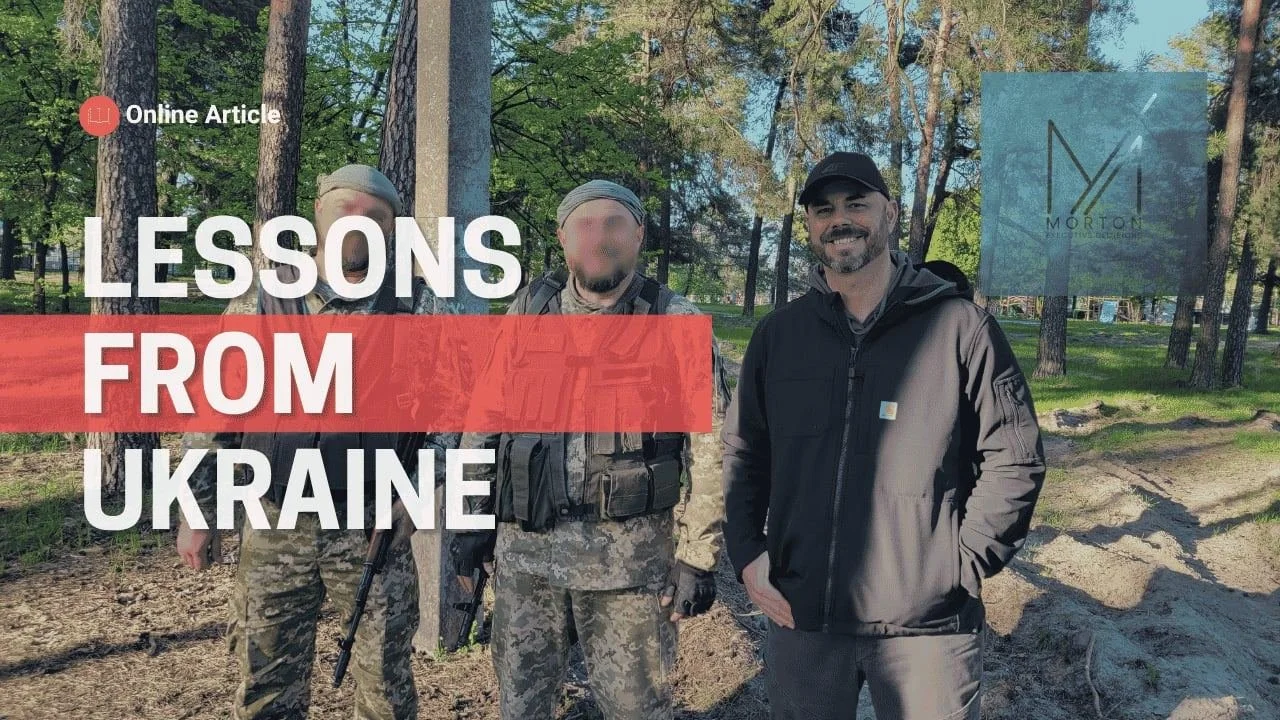
In recent months, my consultancy, Morton Executive Decisions, has worked extensively in Ukraine, conducting long-term needs assessments, supporting refugee evacuations, coordinating humanitarian logistics, and training aid workers. Having witnessed the conflict firsthand, I often hear people express shock at its scale. Yet the past often repeats itself when power and motive align. In this piece, I share lessons from this work and explain why predictive analysis is effective only when we acknowledge our own biases.
I founded Morton Executive Decisions in 2012 and began operating regularly in Ukraine by 2014. My initial assessment of Russia’s actions in Crimea and the Donbas was that Putin would likely avoid a larger war due to anticipated international response. However, I recognized his long-term goal of restoring influence over former Soviet states. A limited, frozen conflict did not seem strategically viable. I advised clients to consider greater escalation a realistic possibility if global leadership or major crises shifted in Russia’s favor.

In the following years, I advised clients to monitor specific indicators: troop concentrations along the border, changes in Russian leadership messaging, and explicit threats from the Kremlin. We defined clear tripwires, or non-negotiable signals, to set off immediate protective action. When Russia launched its full-scale invasion as a “special military operation,” none of my clients had expatriates remaining in Ukraine. The indicators had been visible for years.
Yet many professionals, policymakers, and intelligence organizations still expressed surprise. That reaction is instructive. Predictive analysis fails when it overlooks human nature and the predispositions that influence judgment. When someone claims a catastrophic outcome is “impossible,” they often reveal a reluctance to face uncomfortable realities. Effective analysis requires the discipline to adopt the adversary’s perspective, especially that of someone willing to use force for revisionist goals, rather than filtering every indicator through our own worldview.
Armed conflict also has a strong psychological dimension. People naturally cling to hope even under extreme pressure, which makes it hard to incorporate genuine loss scenarios into contingency plans. Effective preparation demands balancing hope with clear-eyed realism. Intelligence analysts are sometimes dismissed as doomsayers, yet their role is precisely to describe possible futures accurately so that decision-makers can act before those futures arrive.
Predictive analytics are never perfect. Their value depends on the analyst’s ability to step outside personal bias. I continually remind myself to view situations through other people’s eyes and to challenge my own assumptions. I am not always right. I am, however, proud that the approach has helped keep thousands of people out of harm’s way over the years.
Understanding that history contains recurring patterns, deliberately working against our own biases, and treating predictive analysis as a methodical practice rather than a comfort exercise are essential if we want to react effectively to complex threats. Collect accurate data, assess it as objectively as possible, and act on the results. That is how we move from surprise to preparedness.
Understanding that history contains recurring patterns, deliberately working against our own biases, and treating predictive analysis as a disciplined practice rather than a comfort exercise are essential if we want to respond effectively to complex threats. Collect accurate data, assess it as objectively as possible, and act on the results. That is how we move from surprise to preparedness.

Pictures all provided by Morton Executive Decisions personnel.
Contact Pete with questions regarding this article or developing your own protective security program.