

Protective Intelligence: The Sound of Silence
High-profile crises top headlines, while severe conditions in Haiti, Sudan, eastern Congo, and South Sudan receive far less attention than the human cost warrants. As major stories from wealthier countries and higher-visibility wars capture focus, vulnerable regions often deteriorate further with thin coverage and thinner political will. That lack of visibility creates real risk for travelers, humanitarian teams, faith-based workers, and small organizations operating in these areas.
With extensive experience in Haiti and similar environments, I have seen how these countries depend on external aid and informal coping systems. Populations often concentrate on immediate survival, while weak governance and institutions increase their vulnerability. Even minor disturbances in fuel, food movement, or security presence can cause outsized harm. Governments and partners may attempt stabilization, yet these regions remain on the margins of more extensive planning. What looks manageable from a distance can become a crisis for the people who live there, and for the small teams who stay.
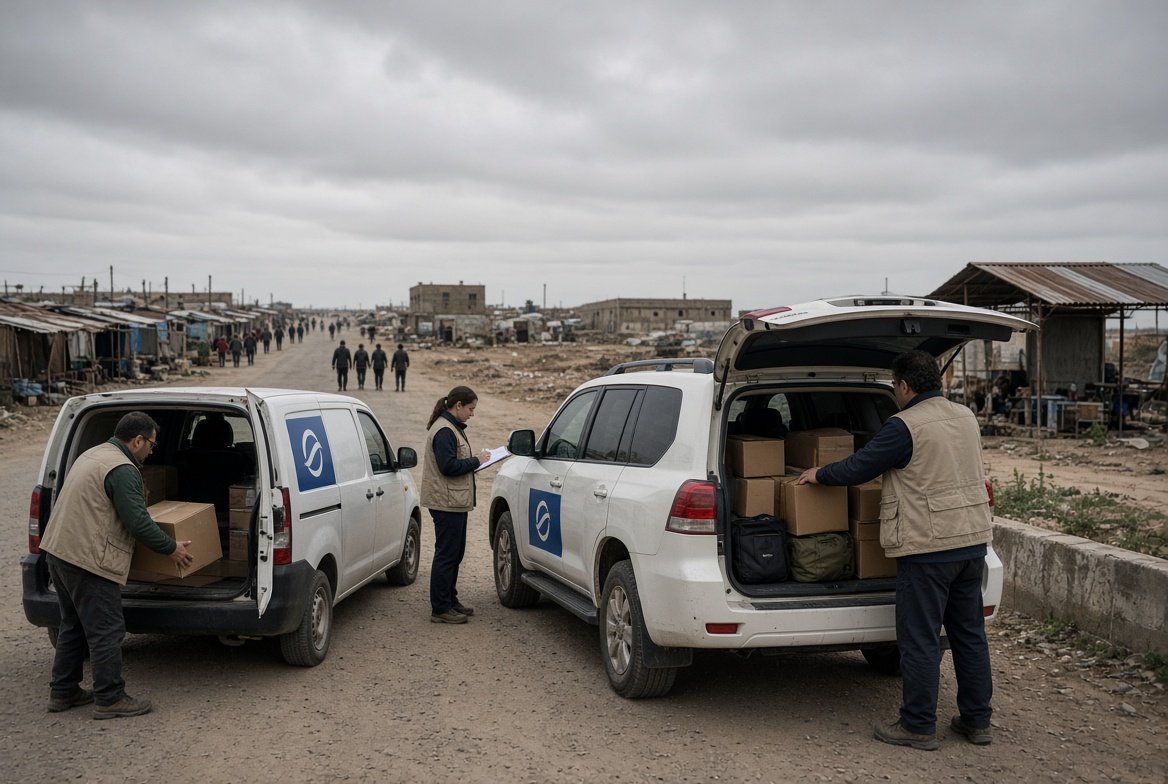
Haiti still illustrates this pattern. Armed groups control most of Port-au-Prince and have pushed outward into communes that previously felt relatively insulated, including hillside towns such as Kenscoff. Fuel and transport corridors, food distribution, and local markets are now contestable assets, not background infrastructure. When gangs hold the roads, food and water stop moving, workers cannot reach clinics, and security patrols shrink. Hospitals that run on generators fail when fuel is diverted or blocked. The cascade is familiar: anger and fear rise, recruitment accelerates (including of children), vigilante groups fill the vacuum, and anyone linked to a foreign organization, by nationality, affiliation, or perceived access to resources, becomes a recurring target. Those who remain to provide aid grow more exposed as others depart.
Similar dynamics are playing out elsewhere, often with even less sustained attention. Sudan’s war has produced the world’s largest displacement and hunger crisis, with drone strikes now accounting for a large share of civilian deaths and fighting shifting through Kordofan and Blue Nile. Eastern Democratic Republic of the Congo has appeared on neglected-crisis lists for a decade; displacement, armed-group control, and a severe Ebola outbreak have stacked on top of one another. South Sudan is sliding back toward large-scale violence as elections approach and the 2018 peace arrangement frays. In each case, small shocks—a blocked road, a fuel cut, a clinic closure, a spike in targeted kidnapping—have major human and operating costs.
Accurate, timely information is essential for prevention and response. Without it, problems escalate and vulnerability increases. Information itself is not scarce. Its volume often hides the few signals that matter.
Why Crises in Fragile Regions Stay Buried
High-profile events and revenue-driven coverage routinely overshadow slow-moving or distant crises. Organizations with limited resources still need early warning for the places where their people, partners, or supply lines actually operate. The problem is rarely a total absence of reporting. It is an overload of material that is not operationally relevant. Teams that rely only on mainstream or algorithm-driven sources miss the indicators that precede a cascade: fuel shortages, recruitment patterns, corridor control, hospital generator failures, and local coping strategies that signal the state is no longer the primary security actor.
The issue is structural. News models stress engagement. They favor sensational stories and repeat visits over coverage of gradual decline in places that do not hold a large commercial audience. “Misinformation” is often used as a catch-all, but the more practical problem for Protective Intelligence and Travel Risk Management is selective attention. Incentives reward volume and emotion over usefulness. For an individual responsible for people or operations, that produces delayed recognition of threats that were visible weeks earlier in local reporting, market data, or conflict-event feeds.
Each morning, keyword-based aggregation can dump more material on a desk than a small team can read. Without intentional filtering, the important signals disappear into the same pile as commentary about crises that do not affect your footprint. The remedy is not more feeds. It is selective consumption, explicit bias checks, and a short list of sources that have proven useful for the locations you actually care about.
The Reality of Information Overload
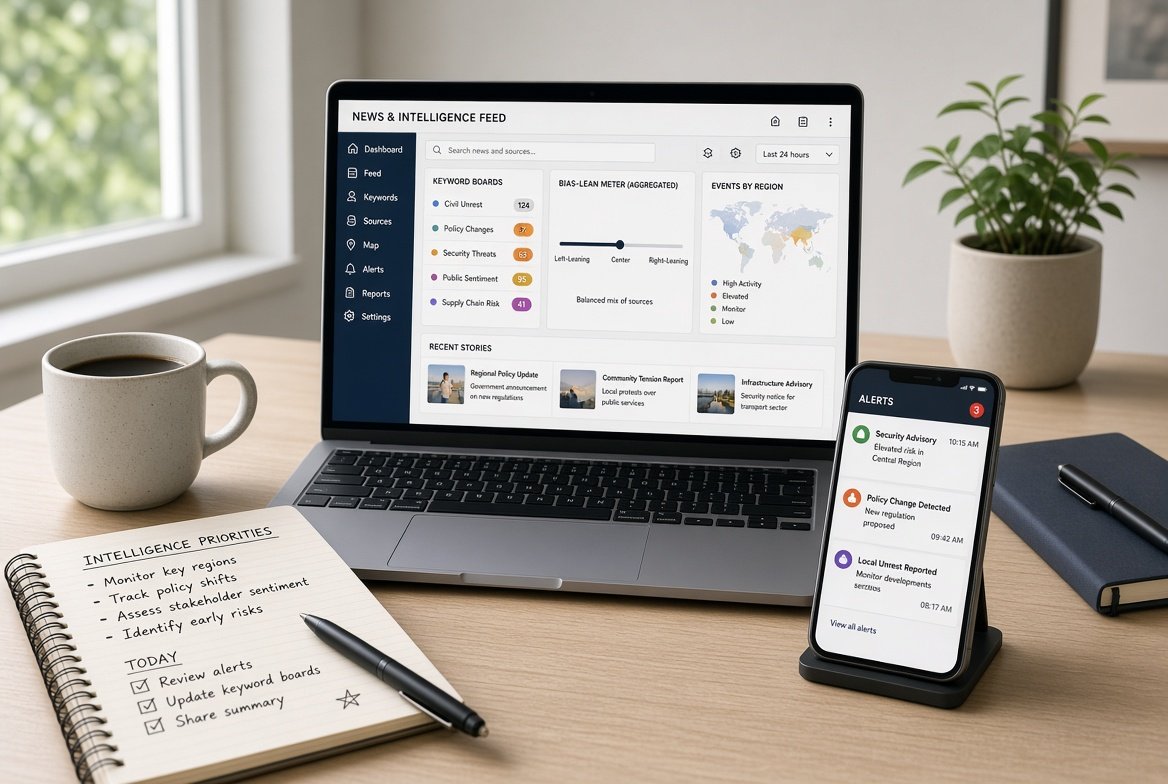
The daily volume of open-source material exceeds what individuals or small teams can process without structure. News outlets and platforms optimize for attention, not for whether a development changes travel, partner safety, or program continuity. Early indicators from Haiti, Sudan, or eastern Congo are buried under higher-traffic stories. Much of what remains carries unexamined bias—geographic, political, or institutional. Practitioners who stay inside a few familiar sources absorb those biases and miss conflicting reports that would have pointed out a problem.
The practical approach is disciplined aggregation, a written bias check, and a concise set of filters rather than an ever-growing list of subscriptions. Each week I still spend time testing and pruning tools so that information lands in usable categories. The aim is not perfect knowledge. It is timely identification of developments which might affect personnel, partners, or operations, followed by a clear decision: watch, adjust, delay, or leave.
That discipline matters more in 2026 than it did when these crises first dropped out of the cycle. Sudan’s war is in its fourth year. Haiti’s gangs are no longer only a Port-au-Prince story. Eastern Congo’s neglect is now measured in a tenth consecutive year on displacement-neglect lists. South Sudan is being described, even inside diplomatic circles, as among the most forgotten files. Silence is not a lack of data. It is a failure to sort data against actual exposure.
Practical Tools for Cutting Through the Noise
A small set of accessible platforms can improve signal detection for organizations with limited resources, provided they use them consistently.
Feedly is still a reliable paid aggregator for collecting sources by keyword and topic. Build boards around the locations and threat categories you actually face—fuel and logistics, gang or armed-group movement, hospital and water-system status, kidnapping, recruitment, and election-related unrest—rather than generic “Africa security” feeds.
Ground News is useful for seeing the political lean of coverage and for spotting stories that appear mainly on one side of a media map. That is a prompt to verify, not a reason to dismiss the story.
Factal and similar alerting services help when teams need proximity- and topic-based notifications rather than end-of-day reading. Integration and analyst follow-up matter more than ping volume.
ACLED (Armed Conflict Location & Event Data) remains one of the most useful independent monitors for conflict, protest, and violence patterns. It will not tell you what to do. It will show whether an uptick is local noise or a trend change.
These tools are not a complete program. Many teams add one specialized feed or a simple shared dashboard. Consistency is the scarce resource: same keywords, same bias check, same review window. Without that discipline, even good platforms recreate the overload they were meant to solve.
A Frugal Framework for Daily Threat Monitoring
Organizations with limited resources can run a repeatable process without a large team or a large budget. Start with actual exposure, not with a world map of every crisis. Name the priority locations and the threat categories that would change a decision: fuel and logistics disruptions, targeted violence against aid or faith-based workers, recruitment or vigilante activity, infrastructure failures that produce security problems, and access constraints that isolate a team.
Turn those into precise keyword sets and source lists inside the aggregator. Review the filtered results at a fixed time each day. Apply a three-part test. Is the development reported by more than one independent source? Does it affect a location or activity you actually have? Does it change risk enough to require action—delaying travel, adjusting routes, increasing local liaison, pre-positioning contingencies, or pulling a team forward to a safer hub?
Once a week, read sources from the opposite political or regional perspective of your primary feed. Flag stories that appear on only one side. Keep a simple log of indicators that later proved useful and retire keywords that only produce noise. Share a short annotated digest with decision-makers instead of a folder of raw links. This is discipline, not headcount. It is how a small organization notices deterioration in Haiti before the next corridor closes, or in Sudan before a drone pattern makes a field movement indefensible.
The same framework supports Travel Risk Management. Before anyone enters a higher-risk environment, run the destination through the keyword set and the bias check. Look first at cascade indicators—fuel, food movement, hospital operations, who controls the road, and who is being targeted—rather than waiting for a mass-casualty event that will finally draw a headline. When those indicators move, response options remain. After the cascade, they usually are not.
Technology will keep improving aggregation and summarization. Human assessment is still what decides whether a fuel shortage in Artibonite, a drone pattern around El Obeid, or an Ebola-access problem in eastern Congo is background noise or a motive to change the plan. Treat information management as a core protective skill, and the silence around these crises becomes less inevitable. It is the product of unfiltered volume. With a short tool stack and a daily habit, that silence can be broken early enough to matter.
If you are responsible for people in places the news cycle has already left behind, the work is not to read everything. It is to hear the few signals that change risk—and to act while you still can.
Need a practical monitoring setup for the places your people actually go?
Morton Executive Decisions works with small and mid-size commercial teams, nonprofits, humanitarian organizations, and faith-based groups that need professional Protective Intelligence and Travel Risk Management without a Fortune 100 budget. A short conversation is usually enough to identify the highest-leverage filters, keywords, and decision rules for your footprint.