Hiring Executive Protection: Beyond the Bodyguard Myth
The scale of spending on protective security is significant. Many large corporations allocate seven-figure sums each year to safeguard a single principal, often exceeding publicly disclosed amounts. Protecting lives has become a major industry.
However, many organizations (commercial, nonprofit, humanitarian, and faith-based) pay for personnel who appear qualified but lack true capability. The Executive Protection field includes many who rely on physical presence or prior service, yet lack the judgment, training, and discipline required. Without a clear licensing standard, decision-makers remain vulnerable to costly errors.
This article outlines the key practical differences organizations with limited resources should consider when hiring effective protection.
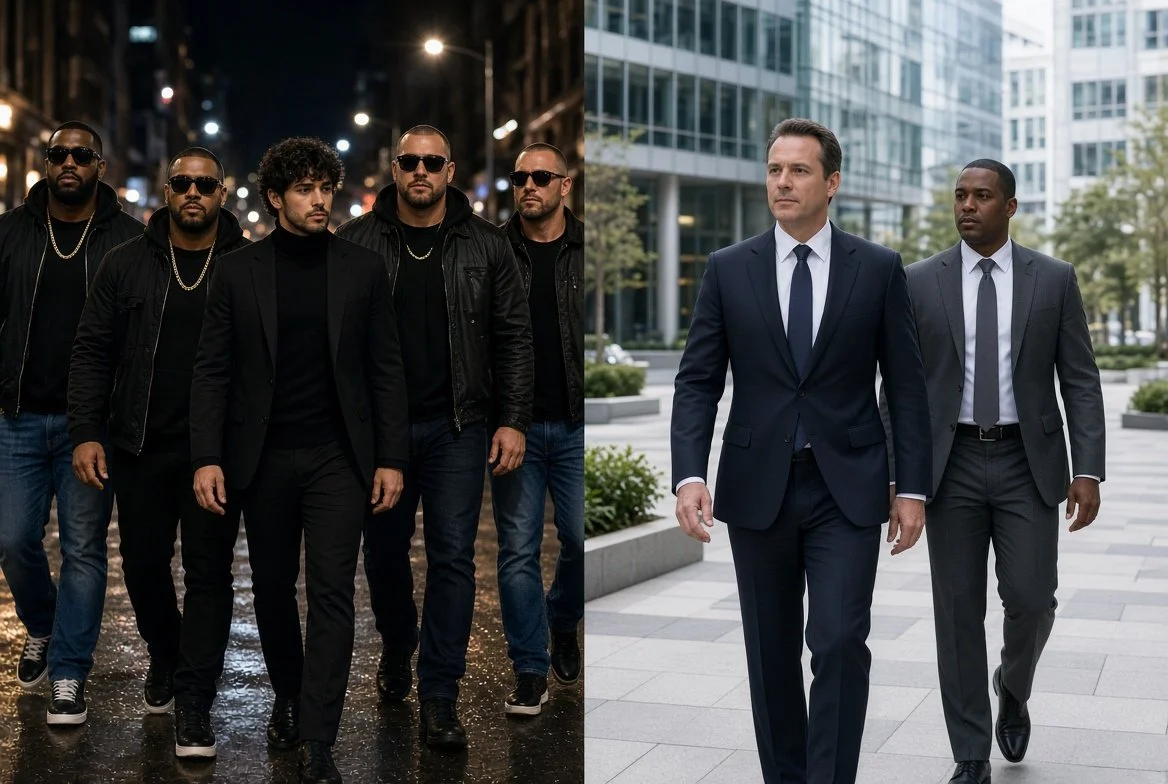
The High Cost of Looking Protected
Significant investment in protective services is justified only when it delivers real risk reduction, not just a sense of safety. Organizations with limited budgets cannot afford to learn after an incident that their protection was superficial. The distinction between appearance and capability is evident in planning, information management, travel decisions, and the daily work that prevents issues.
Protective teams that prioritize appearance often overlook subtle but critical indicators, such as changes in the environment, routine inconsistencies, or gaps in advance work. These oversights create real vulnerabilities. For small businesses, nonprofits, and humanitarian teams, every dollar spent must yield measurable improvements in decision-making and threat avoidance. Appearance alone does not provide this value.
The market often favors candidates with a strong visual presence. Those who emphasize physical training, curated images, and tough rhetoric may interview well. Clients unfamiliar with serious protective operations can mistake this for competence, resulting in investments that fail when conditions become challenging.
Why Prior Military or Law Enforcement Service Is Not Automatic Qualification
Military and law enforcement veterans offer valuable qualities such as discipline, loyalty, and composure under pressure. While these traits are beneficial, they do not automatically ensure effective Executive Protection.
Few military and law enforcement personnel receive formal training in personal security. Even among those who do, the missions differ. Government Personal Security Detachments operate with institutional support, legal authority, and defined rules. Commercial Executive Protection often lacks these supports, especially internationally. Firearms may be restricted, and relationships with local law enforcement require careful management. A single error can result in legal or reputational consequences for both the individual and the organization.
Skills effective in tactical or investigative roles do not automatically translate to the subtle competencies needed for close protection of executives or program leads. Advanced work, behavioral observation, information management, and maintaining a low profile require specific training and experience in commercial settings. Prior service alone is not sufficient preparation.
When assessing candidates, request documentation of relevant training. Reputable commercial programs and select Department of Defense courses provide verifiable records. If these are absent, require completion of recognized training before assigning responsibility for a principal.
Personal Security Detachments and Executive Protection Are Different Missions
These terms are often used interchangeably, but they are distinct. Government Personal Security Detachments (PSD) operate within structured legal and logistical frameworks. Commercial Executive Protection often lacks such support, especially in foreign environments where the use of force is strictly limited, and mistakes have direct consequences for both the individual and the organization.
This distinction affects every aspect of the work, including the focus on advance planning, the need for accurate local information, cultural fluency, and the need to maintain the principal’s broader mission. In commercial or humanitarian settings, a high-visibility, tactical approach can create more problems than it solves.
Recognizing this distinction helps prevent mismatched expectations. Organizations that hire individuals with only government PSD backgrounds, without confirming their ability to adapt to commercial constraints, often realize the gap only after issues arise.
Bodyguards and Executive Protection Professionals Are Not the Same Role
The term “bodyguard” is influenced by entertainment and celebrity culture, often suggesting a large, physically imposing presence. This image persists in hiring discussions, even when the actual requirements differ.

Effective Executive Protection involves a capable, low-ego professional who understands the principal’s priorities and works to prevent avoidable risks. Physical capability is important, and managing confrontations is part of the skill set. However, the most valuable work occurs earlier: gathering information, shaping itineraries, identifying potential issues, and adjusting plans to prevent problems before they arise.
A competent protector can discuss the principal’s objectives, understand the impact of their actions on reputation and operations, and adapt without ego. Calling such a professional a bodyguard understates the true requirements.
The market still contains many people who treat the gym, mixed martial arts training, and carefully staged photographs as the core of the job. Clients who choose based on those signals often receive exactly what they paid for: an impressive appearance that delivers limited protective value.
What Effective Protection Actually Requires
Prevention offers greater value than reaction. Effective Executive Protection professionals focus on reducing the likelihood of incidents through structured information gathering, pattern analysis, advance site assessments, and ongoing plan adjustments.
Success also requires operating effectively within the principal’s environment. Extended close proximity demands judgment, discretion, and strong interpersonal skills. Protectors unable to manage dynamics or prioritize the mission will create friction that undermines protection.
Organizations with limited resources benefit most from protectors who approach each engagement as an intelligence and planning challenge. Physical capability is necessary but should not be the primary focus.
A Practical Framework for Selecting Executive Protection
Approach the selection process as you would any high-stakes hire. Start with a clear definition of requirements, including the principal’s profile, travel patterns, threat environment, and specific gaps to address. Avoid vague descriptions such as “keeping someone safe.”
Require documented training from recognized sources. Request specific examples of advance work, information management, and instances where the candidate adjusted plans to reduce risk. Assess their ability to work independently and exercise sound judgment regarding escalation.
Deliberately assess cultural and interpersonal fit. Extended daily proximity can quickly reveal personality conflicts. A brief trial period with clear expectations and feedback often provides more insight than interviews alone.
Watch for red flags such as excessive focus on physical skills, reluctance to discuss planning, social media activity that highlights clients, or an inability to explain how their presence supports the principal’s objectives.
Document the decision criteria in advance. When resources are limited, the cost of a mismatched hire is not only financial. It is also the lost opportunity to put those same resources against higher-leverage protective measures.
Giving the Relationship Time to Work
Even well-chosen protectors need time to align with the principal. The initial weeks involve mutual adjustment, learning preferences, refining communication, and adapting routines. Ending the relationship prematurely due to early friction can waste valuable capability.
Clear expectations and regular, direct feedback reduce that risk. Most competent professionals want to adapt. A short, structured conversation about what is working and what is not frequently resolves issues that would otherwise end the engagement.
Constantly replacing protectors without allowing time for the relationship to stabilize increases risk. Continuity itself provides protective value.
Choosing Substance
Choosing someone to protect lives should not be based on appearance, prior service alone, or vague reassurance. Organizations with limited resources cannot afford to mistake these signals for real capability.
A bodyguard provides a reactive presence, while a true Executive Protection professional offers a proactive system that reduces the probability of incidents. This system relies on training, judgment, information discipline, and integration with the principal’s mission.
When these elements are present, the investment yields measurable risk reduction. Without them, organizations are left with costly appearances and ongoing exposure.
If you need support evaluating protective requirements or selecting the right capability for your environment, Morton Executive Decisions helps small and mid-sized organizations, nonprofits, and humanitarian teams establish effective protective arrangements without unnecessary overhead. A focused conversation can clarify the most impactful next steps.